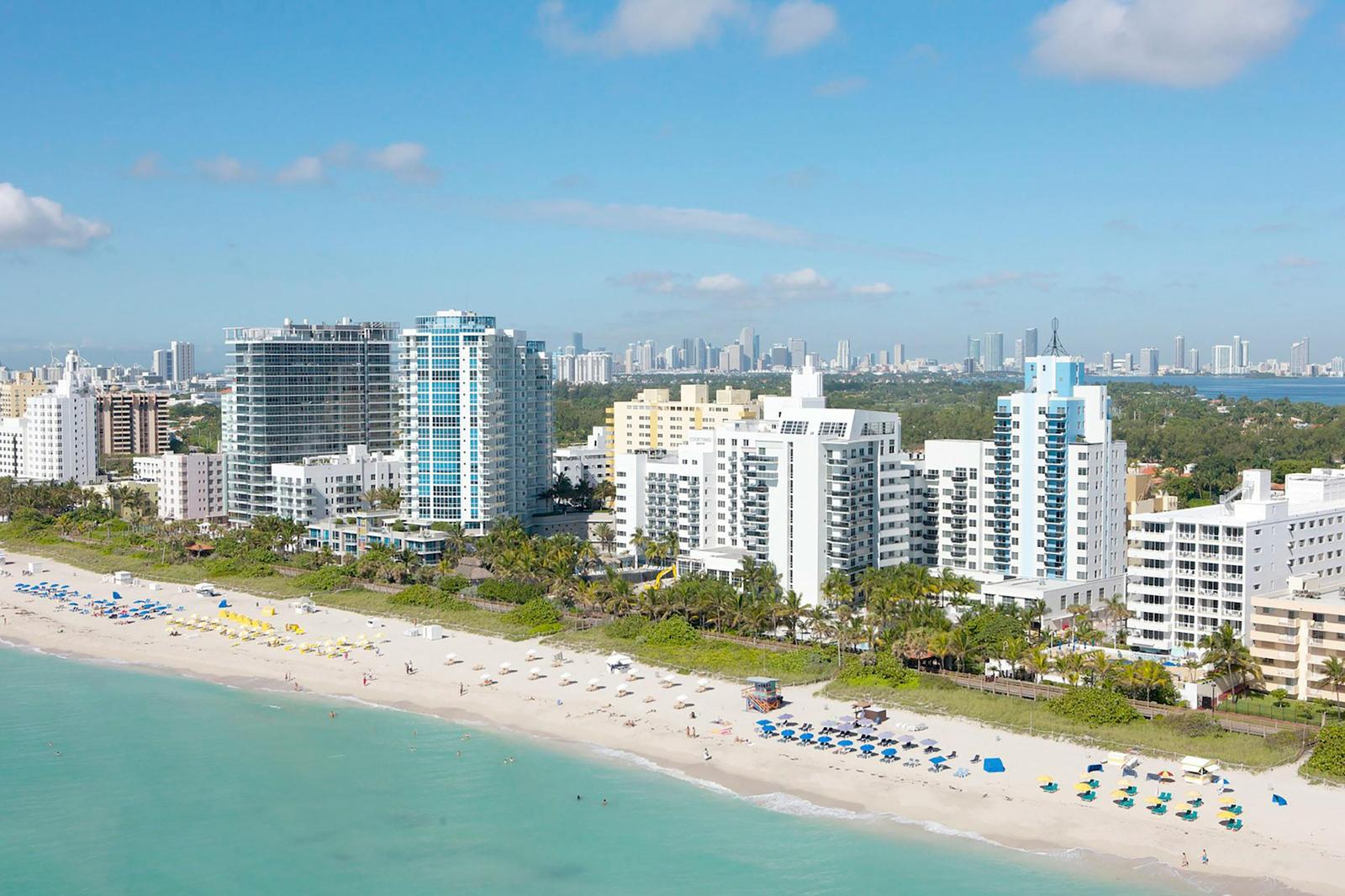
Why Florida still makes sense in 2026
The migration tailwind that powered Florida's run from 2020 to 2023 has moderated — but it hasn't reversed. Net in-migration to Florida is still running positive. Population is still growing. Employment in the services, logistics, and healthcare sectors is still expanding. The fundamentals that made this market interesting haven't disappeared; they've just normalized.
What's changed is the math. The deals that penciled in 2021 at a 3% cap rate no longer pencil. Rates are higher, insurance costs have climbed significantly, and property taxes on recent transactions reflect higher assessed values. If you bought in 2019 and refinanced in 2021, you're fine. If you're underwriting a new acquisition in 2026, you need to be precise.
This guide is built around the actual numbers: what cap rates look like in each major Florida market, what a realistic cash-on-cash return should be, how to stress-test a deal against rate and vacancy risk, and which counties are worth your attention right now.
The state of the market: what the numbers actually say
Florida is not one market. Miami-Dade, Duval, Hillsborough, and Polk County behave very differently from each other. Treating them as interchangeable is how investors overpay in the wrong ZIP code or miss an opportunity in the right one.
Here's a county-level snapshot of where cap rates and median rent-to-price ratios stand as of Q1 2026. These are market-rate figures based on available MLS and rental comps — not asking prices, not proformas handed to you by a seller.
| County | Median SFR Price | Avg Market Rent (3BR) | Est. Cap Rate | Signal |
|---|---|---|---|---|
| Duval (Jacksonville) | $285,000 | $1,850/mo | 6.1% | Strong |
| Polk (Lakeland) | $295,000 | $1,800/mo | 5.8% | Strong |
| Hillsborough (Tampa) | $385,000 | $2,100/mo | 4.9% | Moderate |
| Orange (Orlando) | $370,000 | $2,000/mo | 4.8% | Moderate |
| Pinellas (St. Pete) | $395,000 | $2,050/mo | 4.5% | Moderate |
| Broward (Fort Lauderdale) | $430,000 | $2,200/mo | 4.2% | Tight |
| Miami-Dade | $545,000 | $2,450/mo | 3.7% | Tight |
| Volusia (Daytona) | $310,000 | $1,750/mo | 5.5% | Strong |
| Lee (Fort Myers) | $345,000 | $1,900/mo | 5.2% | Moderate |
| Pasco (New Port Richey) | $310,000 | $1,800/mo | 5.7% | Strong |
Cap rate estimates above assume a 5% vacancy rate, 10% management fee, and $200/mo average maintenance allowance. They do not include debt service — cap rate is a property-level metric, not a cash flow metric. Run your own numbers on any specific deal.
The takeaway: Jacksonville, Lakeland, Volusia, and Pasco stand out on the fundamentals. Miami-Dade and Broward are viable for long-term equity plays or value-add deals, but the cash flow math is difficult at current rates without a significant down payment or below-market acquisition.
How to actually underwrite a Florida deal in 2026
Most investors underwrite backwards — they start with the asking price and work forward to justify a purchase. Run it the other way. Start with what the property should produce, then determine what price makes the math work.
Step 1: Establish gross rental income
Pull 3–5 active comps from Zillow, Rentometer, or direct MLS data. Use the median, not the high. Assume 95% economic occupancy (a 5% vacancy allowance) to get your effective gross income (EGI).
Example: a 3-bedroom in Lakeland renting at $1,800/mo gross = $21,600/year. At 95% occupancy: $20,520 EGI.
Step 2: Calculate net operating income (NOI)
Subtract operating expenses from EGI. For a Florida SFR in 2026, realistic expense load looks like this:
- Property taxes: 1.0%–1.3% of assessed value annually (budget toward the high end on a recent purchase)
- Insurance: $3,000–$5,500/yr for a standard SFR in most Florida counties — more in coastal or high-wind zones
- Property management: 8%–10% of gross rents if using a PM company
- Maintenance and CapEx reserve: $150–$250/mo on a property under 20 years old; $250–$400/mo on an older home
- Vacancy allowance: already baked into your EGI calculation above
Total expenses on a $295,000 Lakeland SFR might realistically run $9,800–$11,200/year. That puts NOI in the $9,300–$10,700 range — a cap rate between 3.2% and 3.6% at purchase price. That's tighter than the market average shown in the table above, which reflects why you need to find deals below list or add value.
Step 3: Calculate cash-on-cash return (COC)
COC is what actually matters to you as a leveraged investor. It measures annual pre-tax cash flow against your actual cash invested (down payment + closing costs + any upfront repairs).
Formula: Annual Cash Flow ÷ Total Cash Invested = COC
Using the Lakeland example with 20% down ($59,000), closing costs of $5,000, and a 7.1% 30-year fixed rate on $236,000:
- Monthly P&I payment: ~$1,586
- Annual debt service: $19,032
- Annual cash flow (NOI minus debt): approximately −$8,500 to −$9,700
At current rates and market rents, a standard-priced SFR in most Florida counties does not cash flow positively at 20% down. This is not a reason to avoid Florida — it's a reason to be precise about your strategy. HELOC-funded acquisitions, value-add plays, house hacking, and deals acquired below market all change the math materially.
A positive COC in today's Florida market typically requires one or more of: a purchase at 10%–15% below comparable sales, a 30%–35% down payment, a value-add component that increases rents post-acquisition, or a house hacking structure that offsets carrying costs.
Get the free Florida Deal Analyzer
A pre-built spreadsheet with all the formulas above — cap rate, COC, NOI, DSCR — set to Florida defaults. Drop in an address and it does the math.
Financing in 2026: what's available and what it costs
The 30-year fixed rate has been trading in the 6.8%–7.3% range for most of 2025 and into 2026 for investment properties. Conventional financing on a non-owner-occupied SFR typically runs 50–75 basis points above primary residence rates.
Conventional investment property loans
Minimum 15% down (usually 20%–25% for better pricing), full income documentation, debt-to-income limits apply. Best rate tier. Available through most banks and mortgage brokers. If you have strong W-2 income and a clean credit profile, this is usually the right tool.
DSCR loans
Debt Service Coverage Ratio loans underwrite the property's income rather than your personal income. No W-2 required. Most DSCR lenders want a minimum ratio of 1.0–1.1 (rent ≥ PITIA). Rates typically run 0.5%–1.0% above conventional. These are purpose-built for investors with multiple properties or non-traditional income — worth pricing out even if you qualify for conventional, because some lenders offer competitive rates and looser reserve requirements.
HELOCs on existing equity
If you own a primary residence or other investment property in Florida with meaningful equity, a HELOC can be one of the most capital-efficient tools available. You draw what you need, pay interest only during the draw period, and use it as down payment on the next acquisition. The key is stress-testing the carry cost: at a typical HELOC rate of prime + 0.5% (roughly 8.5% as of Q1 2026), a $60,000 draw costs ~$425/mo in interest. That needs to be baked into your cash flow model on the new property.
For a deeper look at how HELOCs work as an acquisition tool, the HELOC calculator on the homepage lets you model draw amounts, carry costs, and combined returns on the full stack.
Which strategies actually work right now
House hacking
Still the highest-leverage entry point for most first-time investors. Buy a 2–4 unit property as a primary residence (FHA allows 3.5% down on up to 4 units), live in one unit, rent the others. The rental income offsets most or all of your mortgage, your out-of-pocket carrying cost drops to near zero, and you're building equity with minimal monthly drag. In Jacksonville or Tampa, a well-bought duplex can put you close to breakeven or better from day one.
Value-add
Buying at or below replacement cost with a plan to force appreciation through renovation. Works best in markets where ARV (after-repair value) comps justify the math — you need to be buying at enough of a discount to absorb rehab costs and still hit your target return. Polk County and Duval have enough inventory and spread between distressed and retail values to make this viable.
Short-term rentals (with caution)
STRs in strong Florida markets — coastal Brevard, parts of Osceola, and the I-4 corridor near Orlando — can still produce returns that long-term rentals can't match. The risk is regulatory: Orlando has tightened STR permitting requirements, and several Florida municipalities are still working through restrictions. Before underwriting any STR, verify zoning, HOA rules, and local permitting requirements. The revenue upside is real, but so is the downside if regulations change after you close.
Out-of-state investors targeting Florida
If you're based outside Florida, Jacksonville and Lakeland are the markets most often mentioned by out-of-state investors for good reason: lower price points, established property management infrastructure, and a landlord-friendly legal environment. Florida has no rent control at the state level. Eviction timelines are among the shorter ones in the southeast. These aren't reasons to skip due diligence, but they matter for portfolio modeling.
What to watch in the second half of 2026
Insurance costs remain the most unpredictable variable in Florida. Citizens Property Insurance rates have continued to rise, and private market availability in coastal and high-wind zones is limited. Before closing on any Florida property, get actual insurance quotes — not estimates — and build the real number into your underwriting. A deal that looks like a 5.8% cap rate with a $2,800/yr insurance estimate can look very different at $4,500/yr.
Interest rate trajectory matters, but not the way most people frame it. A 50-basis-point rate cut helps at the margin, but it's not going to transform negative-cash-flow deals into positive ones. The bigger leverage comes from sourcing deals below market and managing expenses tightly.
Property tax reassessment cycles also deserve attention. Florida reassesses on sale. If you're buying a property that was last sold in 2018, the seller may be paying taxes on a much lower assessed value than you will be post-close. Model your taxes at the new assessed value — typically close to purchase price.
The bottom line
Florida real estate in 2026 rewards investors who run the numbers before they fall in love with a deal. The migration tailwind is real. The landlord-friendly legal environment is real. The long-term demographic case is intact. But the math at today's prices and rates requires precision — the deals that worked on a back-of-napkin calculation in 2020 don't work that way now.
The investors doing well right now are the ones buying below market, using creative financing structures, or adding value post-acquisition. The ones struggling are the ones who underwrote at optimistic rent projections and didn't model insurance, taxes, and vacancy correctly.
Run the numbers. Stress-test the deal. Then decide.
Stay ahead of the Florida market
Quarterly deal analysis, county-level cap rate updates, and underwriting breakdowns — sent directly to your inbox. No fluff.